




Redesigning Cubicles for Today's Knowledge Worker
It’s Time for an Office Redesign.
Many companies are moving toward a more flexible layout of their office space. A modular office layout gives you a more options for cubicle designs than ever before. Some estimates put the American “cube dweller” population at 40 million. Is redesigning cubicles to a more open office layout in your future? Here are some factors to consider if you’re planning a modular layout and cubicle design.
1. Consider privacy vs. community when redesigning cubicles
Creativity is increased with employee interaction and team spirit; but some jobs require more privacy and quiet than others. Cubicles range in height from 42” to 80” tall – shoot for a panel height that offers privacy while seated but encourages inter-office communication when standing. You can also build out more private offices with higher panels.
"Studies have shown that employee happiness translates into better performance, longer persistence, and higher goal setting."
2. Consider workflow when redesigning cubicles
How does layout impact your office productivity? Which staff should be clustered together? Who should be located closer to the copy or supply room? With thoughtful space planning you can foster collaboration between team members.
3. Consider culture and aesthetics when redesigning cubicles
What’s the image and environment you want to cultivate? If your company culture is conservative, you’ll want to set some boundaries for cubicle decorating in areas that are in the public eye. Cubicle panels are available in a wide array of fabrics, woods, and laminates, ensuring that you’ll find the perfect look for your office. Pro Tip: When choosing a cubicle style, shoot for a panel height that offers privacy while seated but encourages inter-office communication when standing.
4. Consider ergonomics when redesigning cubicles
An ounce of prevention is worth a pound of cure when it comes to your employees’ health. Most important is desk and computer height, chair adjustment, and encouraging staff to move around at least once an hour. Standing desks are increasingly popular. And even edging on work surfaces and file drawer handles can be important ergonomic choices.
5. Technology
Consider integrating the latest wireless technology and environmental controls into desktop computers or keypads, minimizing the needs for cords and towers. Corovan’s IT Services team can help with your IT strategy, from organizing peripherals and cables to connecting your full tech infrastructure over a single weekend.
6. Leave room for employee creativity
And finally, have fun! To motivate employees and encourage creativity, why not allow some flexibility for them to decorate their own spaces? Pinterest has lots of cubicle decorating ideas, from individual table lamps to full-on themed environments. The more ownership employees have over their workspaces, the happier they are about being at work.
Bonus tip: Hire an expert
To learn about all your options, hire an expert like Corovan. Our professional space-planning consultants can help you develop an optimum office layout that meets all your requirements. Learn more »

Has your business move been under bid?
Has your business move been under bid?
Selecting a moving company based solely on the lowest price can have many undesired repercussions. Before you put your business move at risk, please consider the following:
Q: What do I have to be concerned about with my business move?
A: Since the hourly rates of most business movers are comparable, a low price means the bidder is assigning less resources to your job. If the low bidder is not accurate, the client is burdened with additional costs associated with the move. There may also be considerably more damage and downtime for your business.
It is a mistake to assume all business movers know what they are doing. You should take the time to understand what the bid is based on because the mover might not be aware of the problem until the job has already started.
Q: What can really go wrong? Aren’t all movers the same?
A: Planning and managing your company’s move is a “high profile assignment”. Everyone in your office is affected and the task is typically assigned to someone who already has a full time job. Because the task can be overwhelming, your mover can be a valuable resource.
The cost of non-performance can be substantial. Consider what would happen if your firm is not operational or if your equipment was severely damaged. Cutting corners can also lead to other problems like: Property damage, missed deadlines for IT, unproductive time, downtime for departments , costly and time consuming claims.
Q: Why would a business mover “low ball” me?
A: A low moving bid is not always intentional. Bad estimating can be the result of sloppiness, inexperience or even a simple misunderstanding.
Conversely, you could be dealing with someone who sees an opportunity for lots of changes. Large complex projects are often accompanied by lots of unforeseen changes. An “intentional low baller” is betting on this. If you cannot clearly define the scope of your project, trust becomes very important. In any event, the service and performance suffer.
Q: How do I compare different proposals for my business move?
A: Try reviewing statistics other than the bottom line. A mover who knows their business can easily provide you with this information. Compare and contrast the numbers and you will gain confidence in your decision.
Statistics you should review are: number of total man hours, number of truckloads to be moved, number of cartons provided, services to be provided such as packing, furniture installation, building protection.
This will help expose misunderstandings among the bidders. You may be shocked that the estimator cannot answer simple questions about your business move.
Q: Should I be concerned if there is a wide range among bidders?
A: Yes. It could be a sign that you are not dealing with experienced business movers or that the information you have provided is not clear or complete. Sometimes you are not able to define the scope of your move - the mover’s cost estimate becomes almost useless.
As an industry leader in business moving and storage with over 65 years of experience, Corovan understands the challenges that facilities professionals face when hiring movers. We have the flexibility to work with you to achieve your expectations. For more information on business moving services, contact us >>
Repurpose Your Used Office Furniture
Looking to repurpose your office furniture
We are all familiar with the three of the four Rs of waste management, “Reduce, Reuse and Recycle”. It has become a common waste reduction practice for California businesses since the campaign ignited in the early 90’s. But what about the fourth R? There are many ideas out there about what the fourth R should be, depending on the industry: remix, recover, rebuy, reclaim, rethink are just to name a few. When it comes to office furniture, we suggest repurposing as just the ticket to hitting your goals.
Here are some reasons people don’t repurpose

-
- Its Specific Use No Longer Exists. Too often, office furniture is seen or remembered for only the area previously occupied or the purpose it served – like the “stations from the Accounting area” or “Jerry’s desk.” Once that use or purpose fades, the equipment is seen as orphaned or in the way; except for the nice chairs that are so quickly rolled away to new cubicles, that is.
-
- It’s Easier to Buy New. Furniture dealers and retailers are more than happy to keep selling you more of this “specific” use equipment, rather than dig into what can be salvaged and put into the mix needed today. It is easy and clean to specify new furniture and the profits are nice, too.
-
- Furniture Design is in the Eye of the Beholder. When managers or even users are able to “shop” for furniture, they pick what they like, plain and simple. But just like art, tastes are different. A commitment to repurposing starts with the original purchasing decisions.
-
- Out of Sight, Out of Mind. Landfilling - Since office furniture is not disposed of in the standard office trash cans, most of us don’t realize how much of it is sent to landfills.
Three things you can do to start
- Start thinking of your inventory as a product on a shelf or a resource to be reused and you’ll be amazed how quickly it finds a new home.
- Put thought into what users can buy to enable the optimal reuse – manufacturer, colors, styles can be standardized for optimal results.
- Work with the facilities teams—a responsible vendor should be at least able to recycle portions of the items if not prevent this all together for all our sakes.
Professional Furniture Storage makes repurposing easy
To avoid the obvious cost of purchasing new product and disposal charges as well as sustainability (Green) issues, firms should use affordable, detailed and organized storage of equipment in a way that it can be seamlessly reinserted back into your future office. This is not the same as storage units packed to the roof with parts and pieces or speed packs in boxes of mystery parts, or leaving product standing hoping some nomadic product team moves in.
Professional storage of your office furniture allows for reuse and repurpose with very little, if any, inspection. Much of that benefit is due to professional inventorying of the product details, such as: finish, fabric, size, powered or non-powered, handed or not handed. With these details available, facility teams can think of their storage as another factory pumping out standardized product to be used alongside or instead of new product.
Another benefit of professional furniture storage lies with systems furniture (cubes) inventory. The reuse of surfaces and storage in walled private or semi-private settings can save a fortune, be super flexible and be installed overnight. Just add legs or peds in the right spot and your pallet bay of surfaces may outfit a dozen users without any concern for power and data.
Corovan has Furniture Storage and Management experts ready to help you get started.
Moving Your Business - Why and When
Tips on Why and When to Move Your Business.
Moving your business from one location to another is a major undertaking – but sometimes it’s an absolute necessity. Whether you’re ready to relocate for growth purposes, or need to save on expenses, here’s why and when to move your business.
Why Should You Relocate Your Business?

Rocking the boat can be risky, but sometimes it’s necessary in order to leverage your position and make the business stronger. Here are a few common indicators that it could be time to move.
Your real estate costs are limiting your profits.
Real estate costs can be a major expense, so moving in order to save money is a choice that many businesses make. However, if you do decide to relocate to a new city, be sure you aren't limiting your potential to attract top talent.
You need fresh talent.
Speaking of talent, relocating to attract skilled employees is another common reason to move a business. Your current city – or part of the city – could dissuade top talent from applying to your positions.
You need to enter a new market
If sale of your product or service relies on foot traffic, and there isn’t enough to support your business, it’s time for a move. You can use this opportunity to study the demographics of your new potential area, and then find a location that will support future growth.
You’re ready to grow.
This is the most common reason for moving a business. You can move to a larger location to make way for more employees, more product storage or to get closer to customers and key vendors.
When is the Right Time to Move?
No matter what the reason for the business move, there’s a lot on the line. There are finances, logistics and even employee morale on the line. Look forward and plan based on when your current lease expires. If it’s more than six months away, that’s great. This way you’ll have enough time to prepare, research and plan. If you’re ready to move, here are three keys to timing it just right to ensure that it goes smoothly – and profitably – for your business.
1. Prepare financially.
Even if you feel that your business can support a move, and is ready for future growth, it’s best to wait until you absolutely afford to do it. Seeing an increase in sales and revenue over a three month period doesn’t necessarily mean that you can weather a new three year lease on a larger property.
2. Practice due diligence.
You can never do too much research when it comes to your new location. Potential locations should be vetted thoroughly based on a list of predetermined requirements. Gather a list of your must haves for the new location and take time to find the right opportunity. Focus on the hard facts – like traffic numbers, price per square foot, space for growth – so you can compare “apples to apples” with the various options. You’ll know it’s the right time to move
3. Plan your move thoroughly.
A moving plan for a company should include all of the requirements for a move and–even more importantly – which employees will tackle each piece. There are thousands of details that go into a successful move, so organization and delegation are a must. This way you can be sure that essentials, like establishing new phone and internet service, aren't overlooked. This plan will be your guide before, during and after the move. Moving your business is never a simple undertaking. But if you have strong motivation, and follow a specific process you can make sure that your move is successful.
Need help planning a successful business move?
See 2 solutions for easy move planning »
How Green is Your Company? (Questionnaire)
Are you a “green” company? Green businesses adopt policies and practices that help the environment as well as their bottom line. By adopting more environmentally-friendly practices, your company can save money and reduce your environmental impact and even improve your reputation with your industry.
You may not be on Newsweek’s World’s Greenest Companies List, but there is probably a lot that you are already doing to take your business into a more sustainable direction. At Corovan, we’ve made several changes to adopt more environmentally friendly business practices.
Although there are several ways to “green” your business, there are a few common steps that most companies take when they start to evaluate the environmental impact of their business. Take our questionnaire and find out where you’re working green and where you can make improvements.
Do you have a recycling and reuse program in place?
The average American office disposes of 100 to 200 pounds of paper per year – and without a recycling program, this poundage goes to waste. Recycling paper is a first step, but there’s a lot more you can do in your office to encourage recycling and reuse.
Paper and plastics can both be recycled, and you can reuse containers and storage items by opting for plastic versions instead of standard boxes. For example, if you’re moving offices traditional cardboard cartons cause a lot of waste. Opt for plastic crates that can be reused – but don’t stop there. Excess office supplies and equipment can be donated to charitable organizations to encourage reuse and help out those in need.
Do you have an office wide policy for electricity management?
Lights, computers and other electronic equipment can eat up a lot of wattage even when they are aren’t in direct use. According to the Energy Star program, Monitoring electricity management should be the responsibility of everyone on your staff. Establish a policy that reminds employees to turn off unused electronics or put them in sleep mode, if applicable. According to the Energy Star program, the sleep setting on a computer can help save 300 pounds of carbon dioxide emissions – per year, per machine.
Do you use energy efficient lighting?
Turning off lights isn’t your only option for saving energy. With energy efficient light bulbs, you can save on energy (and lighting costs) even when the lights are on. Compact fluorescent (CFL) and LED lights both use less energy when they are on, and can be used in most standard fixtures. Their initial purchase price is a bit higher than standard bulbs, but you can save hundreds in lighting costs over time.
Do you make purchases from environmentally responsible companies?
Buying recycled materials will not only help reduce your environmental footprint, but it will help other “green” companies stay in business too. Most common office supplies and equipment are available in recycled or environmentally friendly versions, but the most common are:
Post-consumer recycled paper products.
Remanufactured ink and laser toner.
Office appliances (look for those rated through the Energy Star program
Do you use energy efficient vehicles and fueling options?
If your business is involved in the delivery or transport of products, your vehicle usage can be a big factor in your environmental impact. Replacing your vehicles with energy-efficient models when you can will help you reduce your carbon emissions. Your company may also be eligible for tax credits based on your purchase of energy efficient vehicles. If you can’t make the switch yet, look into cleaner burning fuel solutions for your company fleet.
How does your business rate on the green scale? With this questionnaire you’ll know where to focus on making improvements. And when you work with Corovan, you can be sure you’re working with a company that places the same emphasis on “going green.”
Learn more about our company wide environmental policy.
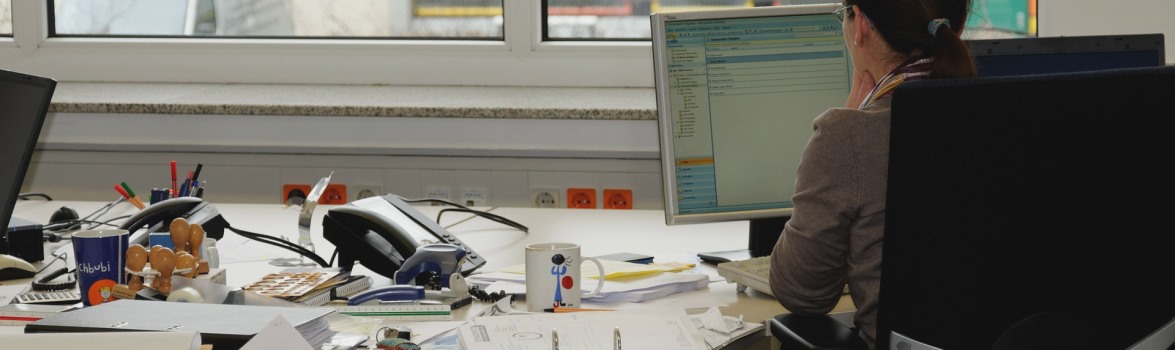
Your Desk Job is Killing You: 3 Ways to be Healthy at Your Desk
Cubicle workers face special challenges when it comes to staying healthy and active. As the modern workforce has shifted from physical labor to desk jobs, the type of activity that most people do on a day to day basis is limited to walking to and from their car.
Research has shown that the rise in obesity over the past five decades may be due to changes in work habits and overall lifestyle.
However, just because you spend the majority of your day at a desk in front of your computer doesn’t mean you have to resign yourself to an unhealthy lifestyle. Commit to being an active cube resident and you’ll benefit from a happier and healthier workday.
Even if you’re not ready to switch office equipment or show off your bicep curls to your coworkers, at the very least you can make sure you get up and move regularly. Setting a timer to go off every 45 minutes will remind you to get up, walk around the office and get your body moving.
Why is Sitting So Dangerous?
Sitting at a desk all day doesn’t seem strenuous or harmful—here are some eye-opening facts from the latest research.
- Sitting too much can increase your chances for events associated with cardiovascular disease, such as chest pain (angina) or a heart attack. (Mayo Clinic)
- Those who sit more than 11 hours per day have a 40% higher risk of dying in the next three years, compared to those who sat less than four hours a day. (Sax Institute)
- Sitting for more than six hours per day makes you significantly more likely to develop diabetes. (Kansas State University)
Three Ways to Make Desk Jobs Healthier
The eye-opening research on sitting and health may have you concerned about your life as a cubicle worker. Fortunately, there are several things that you can do to help increase your activity and decrease your risk of chronic illness.
-
Use a standing (or adjustable) desk.
Standing desk usage is on the rise – and with good reason. With a standing workstation, you can comfortably work at the computer, burn more calories and develop better cardiovascular health. You can use a standing desk with a high stool so you can opt to sit or stand. Alternatively, you can use an adjustable desk that will allow you to customize your workstation throughout the day.
-
Explore ergonomics.
Ergonomics is the science of making the body comfortable – including in a workspace. Although having an ergonomic chair or keyboard won’t get your entire body moving, it will help ensure that you’re as pain-free as possible. With a comfy workspace and equipment that supports your body, you’ll be less likely to suffer from repetitive injuries and you’ll be ready to hit the gym after the workday ends.
-
Try out cubicle exercises.
There are dozens of cubicle exercises that you can do right at your desk. While your office mates might give you a few odd glances, you’ll benefit from a stronger body and less joint stiffness. Try doing some sitting pushups using the edge of your desk for resistance. You can also crunch your abdominals, do glute squeezes and stretch your chest muscles from a sitting position.
Get moving toward an active workspace
A few simple changes in your office can yield long-term health benefits for your employees. A workplace change expert can help, starting with furniture solutions. Find out how »

Free Guide: How to Plan Your Move
Free Guide: How to Plan Your Move
Execute a safe, successful and trouble free office relocation with this step-by-step office moving guide.
With this free guide, you'll learn:
- How to prepare your floor plan and office layout
- What to pack, and how to pack it
- How to lable all your items to ensure a smooth move
- How to prepare your office equipment
- What to expect on moving day
This is an exclusive guide to office moving from workplace change experts.
Sign up for an in-office consultation and we'll deliver it to you.

Office Moving Checklist for Your Next Business Move
Your Office Moving Checklist
Preparing to move an office or business can be a lot more complicated than moving a household. Preparing is key and ensuring that everything on your list is complete, is essential. Use this quick office moving checklist as a guide to keeping your move on track.
Here are some things to consider during your next business move
- Determine a time-frame and moving schedule.
- Set-up a communications plan to let customers, suppliers and other pertinent parties know about the move.
- Make a list of tasks and assign tasks to individuals.
- If moving a larger company, set-up a moving committee to help organize the move and to keep the move on track.
- Inform employees and get them involved; make sure they know their roles and what is expected of them; for example, do they pack their own office or cubicle?
- Determine the new office set-up and look; make sure you know ahead of time where offices will be located and where equipment needs to be installed.
Plan a Better Business Move
Get a free business moving checklist with all the advice you need to execute a successful business move, or change.
- Get moving quotes from companies, check references and book your office movers.
- Contact current service providers to inform them of the move; make sure that new providers are aware of installation dates, including telephone lines, fax, hydro, Internet access, postal service, couriers, etc…
- If you require special technical assistance to move and install electronic equipment such as a photocopier, computer network or specialty telephone service, make sure you book this well in advance so that the service is up and running on your move-in date.
- Make sure you've established a packing schedule; determine what can be packed in advance and what areas are packed last.
- Purchase packing supplies, including the appropriate moving boxes.
- Provide special packing instructions for those sensitive and/or custom equipment to employees or professional packers; make sure boxes are properly packed and labeled with office location, importance, and content.
- Prepare furniture for moving and label each piece so it will be moved to the correct area of the new space; this can be accomplished by numbering or labeling areas of the new office space on a blueprint map; label the furniture accordingly and give the map to the movers so they know where to place items, including packed boxes.
- Make sure equipment has been properly prepared for moving; this includes removing any liquids and ensuring removable parts are packed and labeled; if you don't know how to pack equipment, hire a technical specialist or call the equipment manufacturer for information and advice.
- To avoid additional charges, find out in advance where the moving truck can park to load at the old office location and where it can unload at the new location; inform surrounding businesses of your move and if you'll be blocking entrances or taking additional parking spaces.

Diesel Trucks Are A Major Cause of Pollution
How is Corovan Adapting?
Diesel trucks are a necessary tool in the moving business, but they can also be a major cause of pollution. Diesel exhaust contains more than 40 toxic air contaminants, ozone-forming compounds ("smog") and fine particulate matter ("soot"). Heavy-duty trucks alone emit almost 400 million metric tons of heat-trapping gases annually, accounting for about 6 percent of US carbon emissions.
Corovan was one of the first moving companies to update its fleet with new energy efficient trucks.
Sustainability is vital to the success of any organization, as well as its reputation in the community. Corovan subscribes to the environmental philosophy of achieving the same or better business results using fewer resources. Nowhere is our commitment to the environment more evident than our investment in new trucks.
These new state of the art trucks are the cleanest trucks in the industry:
- Comply with upcoming State of California air quality standards
- Emit 65% less in hydrocarbon emissions
- Provide 58% reduction in carbon monoxide
- Provide 41% reduction in nitrogen oxide emissions
Cleaner exhaust is not the only benefit of these trucks. New technology allows Corovan to operate lift gates without having to let the truck idle. Overtime, Corovan has been updating its fleet with new, energy efficient vehicles with over 80 trucks replaced.
And we will continue our commitment to sustainability by continuing to update the rest of our fleet.
Let us help you plan a greener office move »

7 Small Changes to Boost Employee Productivity
It’s one fact that everyone can agree on: We’re all working harder than ever. But are we more productive? Here are seven ideas that are guaranteed to maximize productivity in your workplace.
1. Best-Practice Ergonomics
Investing in good ergonomics can save you a bundle in absenteeism and healthcare costs. Start out by checking your employees’ workstations for the proper chair and monitor height. And encourage your staff to take a quick break from sitting at least once every hour. Get more tips on how to get comfortable here.
2. Temper Your Thermostat

It’s a dilemma fit for Goldilocks: Keep your office too cold and typing errors increase while output slows. Raise the temperature too high and employees are nodding off at their desks. If you want your office productivity to be “just right,” set your thermostat somewhere between 72° and 77°F, the experts say. And don’t forget the importance of good ventilation.
3. Go Green and Leafy
Plants also add value when it comes to the workplace environment. They’re proven to filter the air, fighting mold and bacteria to keep your workforce healthier. Depending on the size of your plants relative to the room, they can also cool the ambient air up to 10° and increase oxygen levels – especially important in spaces with multiple computers.
4. Don’t Scrimp on the Java
A good coffee and tea system is a great investment in your staff’s productivity. According to DailyPerk, more than 60% of employees feel that good coffee makes them feel more valued and 43% report a positive effect on their work productivity. Just as significant, when coffee is not provided by the office, 22% of employees will leave to get coffee or tea, accounting for 14 to 20 minutes a day. This adds up to a potential loss of over $15,000 per year for an office of 50 people!
5. Favor Fitness
The more fit your colleagues, the less likely they are to call from bed with a cold or a back injury. And research shows that the least productive hours of the day are between noon and 2 pm. So why not encourage your staff to work out at lunchtime by subsidizing a gym membership, or even turn your storage room into an in-house gym?
6. Enforce Those Vacations
It may sound counter-intuitive, but vacations and days off are key to keeping employees motivated and focused. Countless studies have shown dramatically increased productivity levels at companies that encourage employees to take breaks. You may not want to go as far as Hubspot or GoHealthInsurance.com, which offer unlimited vacation policies. But the former has been ranked as the #2 fastest-growing software company on the Inc. 500, and the latter reports a 200% increase in growth over the last year.
7. Sleep on the Job
The Centers for Disease Control and Prevention estimates that nearly 30% of American workers – 40.6 million – don’t get enough rest to function at peak levels. One study by Harvard Medical School found that insufficient sleep cost U.S. firms $63.2 billion in lost productivity each year. Some companies promote the idea of “power naps,” even creating “nap pods” for quick, on-the-job snoozing.
Bonus Tip: Step back and take in the view
Sometimes you need to step back and take a larger view of your operation. Is your office layout supporting your corporate vision and your employees’ needs? Is an open or flexible workspace the better option, or a more divided, private layout? Corovan is an industry expert in space planning. Our advisors can help you create the ideal space to promote optimum productivity.
Four Upgrades to Modernize Your Office
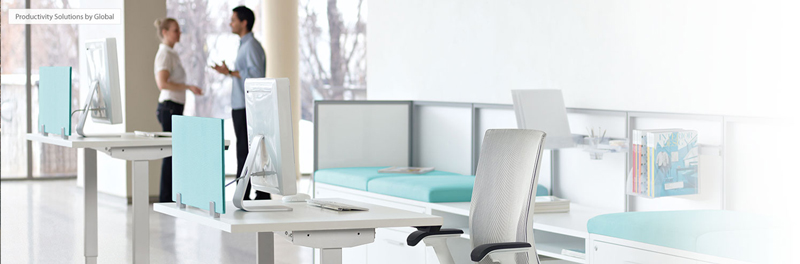
Good business means staying on top of industry trends and best practices. Implementing systems for modern standards of efficiency, productivity, and employee well-being can give any company an edge over less innovative competition. Does your organization want to be at the forefront of increasing productivity and employee well-being? Here are 4 methods trending among forward-thinking companies:
1. Sit-Stand Workstations
Sitting disease is the amalgam of human symptoms that can result from spending too much time sitting, including high blood pressure and other cardiovascular problems. The CDC published a recent study that shows "using a sit-stand device at work can reduce sitting time and generate other health benefits for workers." Mayo Clinic Cardiologist Martha Grogan says, "For people who sit most of the day, their risk of a heart attack is about the same as smoking” When the health risks of smoking in the office became apparent, companies acted to protect employee health by banning the practice. Will your office be an early adapter of the newest innovation in protecting employee health? To learn more about sitting disease and how to get your office healthy with sit-stand devices, read please stand, you'll live longer.
2. Open, Common Workspaces
The built environment affects the social environment. Experts in biology, architecture, sociology and other fields will tell you the link between space design and human behavior is strong. Business experts are no exception: Tim Parker, MSBA says, "22% improvement in overall performance was realized by all respondents [in a recent study] who incorporated the concepts important to a better-designed workspace." Open, common, workspaces do a lot to promote employee collaboration, and therefore boost employee satisfaction and productivity.
3. Flexible Workspaces
While common workspaces are great to promote collaboration, everyone still needs some dedicated space to keep files and personal belongings. That's why the workspace of the future is a flexible workspace, allowing for both personal space and easy collaboration. Innovative companies are benching workstations, as opposed to isolating workers in cubicles, or completely de-personalizing with only open tables. In this system, individual workstations are linked together and left open without dividers, giving employees the best of both worlds. Corovan can help you access a wide range of options for workstation benching.
4. Company-wide Sustainability
In 2013, on-trend companies are taking sustainability to the next level. While there's nothing new about Green Business; customers and employees have high expectations for environmental responsibility. So, if your business isn't making green choices across the board, consumers and talent may be tempted to go elsewhere. Corovan is an innovator in green moving services. We'd love to make your move efficient and low impact.
At Corovan, we stay on top of innovations in our industry, so we can help you get ahead in yours.

Company Holiday Party Ideas on a Budget
Your office is the perfect place to celebrate!
Planning great company holiday party ideas on a budget is challenging. Having the celebration in the office is a great way to save money. Here are five steps that can help make your party in the office memorable and fun!
1. Add Background Music
Coworkers in a room, staring across a table at each other: is that a party or just another meeting? Set a festive tone by providing a soundtrack appropriate to the mood you're trying to create. Whether you're going for polite cocktail party chatter or full-tilt boogying, you can create a free Spotify playlist or Pandora channel or try streaming internet radio. When your employees hear music wafting from your party location, it helps build positive anticipation as they head down the hall to join the celebration—in other words, you're literally putting them in the party mindset.
2. Hold a Costume Contest
This can be as involved or simple as is appropriate for office culture. If things around your workplace are pretty buttoned up, keep it mild instead of wild: purchase Santa or baseball hats, have people decorate them, and then conduct a fashion show or gallery walk and give out prizes for the most creative entries. If your office culture is highly engaged and tolerates full-body sequins, go for something more elaborate, like “Reindeer on the Riviera” or “Snowpeople on a Cruise Ship.”
Promote your costume contest—and the theme—a month before the party to give people enough time to devise something or team up with colleagues. For middle ground, a good old-fashioned ugly-holiday-sweater contest is a cheap, easy way to have a lot of fun! Make sure you also create space for a contestant runway, as well as a separate judges’ room to ensure private discussion when picking the winners.
Support—even for the holidays!
Worried that cubicles and copy machines will impede the fun? We'll help you arrange your space and do the heavy lifting so you can enjoy your office holiday party this year. Go »
3. Decorate Creatively
Sure, you could trot out the same decorations your company has used for the past eight holiday parties, but why not shake it up this year? One idea is to ask coworkers who have kids to bring in holiday artwork made by their children and put it up around the office. Most of the time parents have an abundance of this stuff and are running out of room on the fridge. Besides being adorable, this will spark conversation about family and help people get to know each other. And if you want to give that perennial display of Santa and all his reindeer a break this year, we can pick it up and take it to offsite storage for you, freeing up space for indoor bocce, a carving station, or team Jenga games.
4. Serve Up Delicious Food
We’ve all seen it happen: potluck office parties which yield store-bought cookies and juice, and more paper plates and cups than you could use in 100 holiday parties. Instead of employees buying their own contributions, you can have everyone contribute to a community pot that can go towards supporting a local bakery or restaurant! Tacos and pasteles from a Mexican restaurant, or fried chicken and sweet potato pie from a soul food place are some tasty inexpensive options that won’t hang around the office kitchen getting stale for the next six months. Be sure to provide plenty of space and table options if people want to sit or stand while they eat. Not only does that allow employees to converse easily, it also helps avoid the classic awkward holiday party pitfall of juggling appetizers and a drink when trying to shake someone’s hand.
5. Enjoy the Party
As your company's party planner, it's easy to stay in that role of "host" or event producer. It's not a party if you are too busy to enjoy hanging out. Don't worry about pushing all the tables aside in the conference room, and then back in place when the party is done. From setup to breakdown, it's important to hire professionals who can help you throw a legendary party. So you can spoon a little more cheese on your make-your-own baked potato—and relax. It's the holidays.
Holiday Moves?
Having a holiday celebration at the office not only brings cheer into the workplace, but is bottom-line friendly, too. Corovan provides ongoing facility support for your business needs and budget. We can move your office furniture into the perfect layout for holiday celebrations or other functions. We can make space for a dance floor without having to re-route the entire IT system, or move that heavy filing cabinet that’s blocking the door to the closet where the decorations are stored! We can make sure everything is in place, and just as important, we can make sure it all gets put back as it was when you’re done celebrating. We here at Corovan wish you and yours a fun holiday season.